
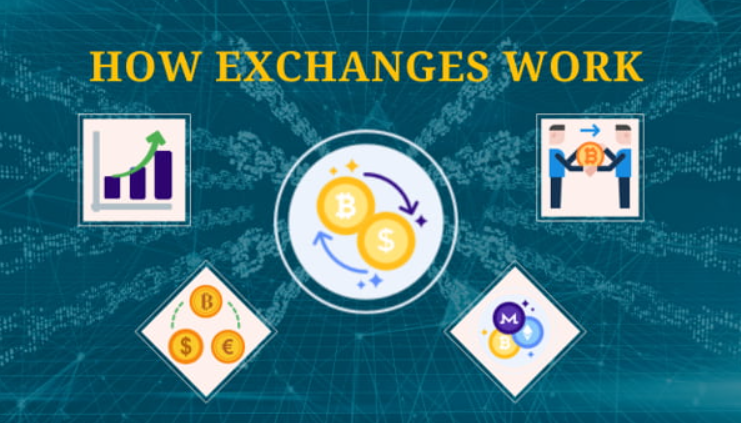
Cryptocurrency exchanges are the gateway to buying, selling, and trading digital assets. For beginners, understanding exchanges is essential before entering the crypto market. Without using an exchange safely, you risk scams, hacks, and losses.
This guide explains what crypto exchanges are, different types, how they work, fees, pros and cons, and tips for beginners.
What Is a Cryptocurrency Exchange?
A cryptocurrency exchange is a platform where you can:
- Buy crypto using fiat money (USD, EUR, etc.)
- Sell crypto for fiat
- Trade one cryptocurrency for another
- Track prices and market trends
Think of an exchange as a crypto marketplace, similar to a stock exchange, but 24/7.
How Do Cryptocurrency Exchanges Work?
Step-by-Step:
- Sign up on the platform
- Verify identity (KYC)
- Deposit funds (fiat or crypto)
- Place an order (buy or sell)
- Withdraw funds to your wallet (optional)
Exchanges match buyers and sellers or act as market makers to provide liquidity.
Types of Cryptocurrency Exchanges
Exchanges are mainly divided into centralized and decentralized.
1. Centralized Exchanges (CEX)
Centralized exchanges are run by a company. They handle order matching, custody, and security.
Popular Examples:
- Binance
- Coinbase
- Kraken
Pros & Cons Table:
| Feature | Pros | Cons |
|---|---|---|
| User-friendly | ✅ Easy to use | Users don’t fully control private keys |
| Liquidity | ✅ High | Can be hacked |
| Support | ✅ Customer service | Subject to regulations |
| Fees | Low to medium | Withdrawal fees apply |
CEX is recommended for beginners due to ease of use.
2. Decentralized Exchanges (DEX)
Decentralized exchanges operate without a central authority. Users trade directly via smart contracts.
Popular Examples:
- Uniswap
- PancakeSwap
- Sushiswap
Pros & Cons Table:
| Feature | Pros | Cons |
|---|---|---|
| Control | Users keep private keys | More technical knowledge required |
| Security | No central hack risk | Vulnerable to smart contract bugs |
| Fees | Depends on blockchain | Can be high during network congestion |
| Accessibility | No KYC needed | Harder for beginners |
DEX is great for advanced users or privacy-conscious traders.
3. Hybrid Exchanges
Some exchanges combine CEX and DEX features:
- Centralized interface
- Non-custodial trading
- Example: Nash, Deversifi
Spot vs Derivatives Exchanges
| Type | Description | Beginner-Friendly |
|---|---|---|
| Spot | Buy/sell crypto instantly | ✅ Yes |
| Futures/Derivatives | Contracts based on crypto price | ❌ No, high risk |
| Margin | Borrow funds to trade | ❌ Advanced users |
Beginners should focus on spot trading first.
How Crypto Exchange Fees Work
Exchanges charge different types of fees:
| Fee Type | Description |
|---|---|
| Trading Fee | Small % per trade |
| Withdrawal Fee | Fee for moving crypto out |
| Deposit Fee | Rare, for fiat deposits |
| Spread | Difference between buy/sell price |
Tip: Compare exchanges to find low fees.
Security Features of Exchanges
| Security Feature | Purpose |
|---|---|
| 2FA | Protect account login |
| Cold storage | Store most crypto offline |
| Insurance | Some exchanges cover hacks |
| Withdrawal whitelist | Only allow trusted wallets |
| KYC/AML | Prevent fraud & comply with law |
Pros and Cons of Using Exchanges
✅ Advantages
- Easy access to crypto
- High liquidity for fast trading
- Many coins available
- Advanced trading tools
- Customer support available
❌ Disadvantages
- Users don’t control private keys (CEX)
- Exchange hacks are possible
- Some exchanges are unregulated
- Fees can add up
- Dependence on platform stability
Tips for Beginners Using Exchanges
- Start with a trusted exchange
- Enable 2FA immediately
- Withdraw funds to a personal wallet if holding long-term
- Avoid storing large amounts on exchanges
- Start with spot trading
- Learn about fees and order types
Hot Wallet vs Exchange Storage
| Storage Type | Pros | Cons |
|---|---|---|
| Exchange | Quick trading | Less secure |
| Hot Wallet | Fast access | Medium risk |
| Cold Wallet | Very secure | Less convenient |
Rule: Trade on exchanges, store in wallets.
FAQs About Cryptocurrency Exchanges
Q1. Are exchanges safe?
Yes, if you use reputable, regulated platforms and follow security rules.
Q2. Can I trade without KYC?
Some DEXs allow it, but CEXs usually require KYC for security and compliance.
Q3. Should I leave crypto on an exchange?
Only for active trading. For long-term holding, use a wallet.
Conclusion
Cryptocurrency exchanges are essential for trading and buying crypto. Beginners should focus on centralized exchanges for ease, use strong security measures, and withdraw funds to personal wallets for safety. Understanding exchanges is the first step to becoming a confident crypto trader.
Exchanges are the bridge to crypto—but security is your shield.




Leave a Reply