
Crypto mining is one of the most misunderstood topics in cryptocurrency. Many beginners think mining is just “earning free coins,” but in reality, mining plays a very important role in securing blockchain networks.
This article explains what crypto mining is, how it works, types of mining, equipment needed, advantages and disadvantages, and whether mining is suitable for beginners—in a simple and educational way.
What Is Crypto Mining?
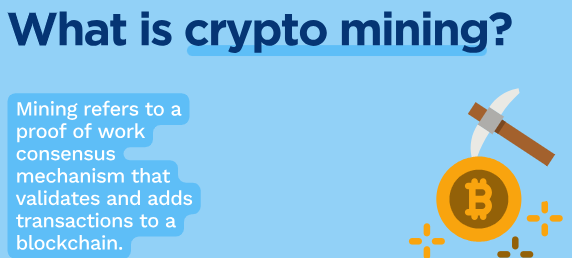
Crypto mining is the process of verifying transactions and adding them to the blockchain. In return for this work, miners receive cryptocurrency rewards.
Mining helps to:
- Secure the network
- Confirm transactions
- Prevent double-spending
- Maintain decentralization
Without mining (or validation), blockchains like Bitcoin would not work.
Why Is Crypto Mining Important?
Mining is essential because it:
- Keeps the blockchain trustworthy
- Removes the need for a central authority
- Ensures transaction accuracy
- Protects the network from attacks
Miners act like auditors of the blockchain.
How Does Crypto Mining Work?
Simple Mining Process:
- Users make crypto transactions
- Transactions are grouped into a block
- Miners compete to solve a complex math puzzle
- First miner to solve it validates the block
- Block is added to the blockchain
- Miner receives a reward
This process is called Proof of Work (PoW).
What Is Proof of Work (PoW)?
Proof of Work is a consensus mechanism used by some blockchains.
PoW Key Points:
- Requires computational power
- Uses electricity
- Very secure
- Difficult to attack
Bitcoin uses Proof of Work.
What Is a Mining Reward?
Mining rewards include:
- Block reward (newly created coins)
- Transaction fees
Example (Bitcoin):
- Block reward reduces every 4 years (halving)
- Maximum supply: 21 million BTC
Types of Crypto Mining
There are different ways to mine cryptocurrency.
1. CPU Mining
- Uses normal computer processors
- Very slow
- Mostly outdated
❌ Not profitable today
2. GPU Mining
- Uses graphics cards
- Faster than CPU
- Used for some altcoins
✔️ Better than CPU
❌ High electricity usage
3. ASIC Mining
- Specialized mining machines
- Extremely powerful
- Used mainly for Bitcoin
✔️ High performance
❌ Expensive and energy-hungry
Mining Types Comparison Table
| Mining Type | Power | Cost | Use Today |
|---|---|---|---|
| CPU | Low | Low | ❌ Rare |
| GPU | Medium | Medium | ⚠️ Limited |
| ASIC | Very High | High | ✅ Common |
What Is Mining Pool?
A mining pool is a group of miners who combine computing power.
Why Use a Mining Pool?
- Higher chance of earning rewards
- Stable income
- Shared rewards
Mining alone (solo mining) is very difficult today.
Cloud Mining Explained
Cloud mining lets users rent mining power online.
Pros:
- No hardware needed
- Easy to start
Cons:
- Many scams
- Low transparency
- Less control
⚠️ Beginners should be very cautious.
Equipment Needed for Mining
🛠️ Mining Requirements Table
| Item | Purpose |
|---|---|
| Mining hardware | Processing power |
| Electricity | Run machines |
| Internet | Network connection |
| Mining software | Control mining |
| Wallet | Receive rewards |
Is Crypto Mining Profitable?
Mining profitability depends on:
- Electricity cost
- Hardware efficiency
- Coin price
- Network difficulty
For most beginners, mining is not very profitable today.
Advantages of Crypto Mining
✅ Pros
- Secures blockchain networks
- Decentralized system
- Earns crypto rewards
- Supports trustless transactions
- Backbone of Proof-of-Work blockchains
Disadvantages of Crypto Mining
❌ Cons
- High electricity consumption
- Expensive hardware
- Environmental concerns
- Technical complexity
- Reduced profitability for small miners
Is Mining Safe?
Mining itself is legal in many countries, but:
- Laws vary by region
- Electricity regulations apply
- Environmental rules may apply
Always check local regulations.
Mining vs Staking (Quick Comparison)
| Feature | Mining | Staking |
|---|---|---|
| Energy use | High | Low |
| Hardware | Expensive | Minimal |
| Complexity | High | Low |
| Reward | Block reward | Staking reward |
Many modern blockchains now prefer staking.
Should Beginners Try Mining?
For most beginners:
- ❌ Mining is expensive and complex
- ✅ Learning mining concepts is useful
- ✅ Staking or learning trading basics is easier
Mining today is best suited for large-scale operations.
Common Mining Myths
❌ Mining is easy money
❌ Mining works on any computer
❌ Mining is free
❌ Mining guarantees profit
Reality: Mining requires investment, planning, and patience.
FAQs About Crypto Mining
Q1. Can I mine Bitcoin on my laptop?
No, it is not practical or profitable.
Q2. Is mining bad for the environment?
Traditional PoW mining uses a lot of energy, which is why greener solutions are emerging.
Q3. Is mining still relevant?
Yes, but mostly for large miners and specific blockchains.
Conclusion
Crypto mining is the foundation of Proof-of-Work blockchains like Bitcoin. It ensures security, decentralization, and trust in the network. However, mining today is resource-intensive and not beginner-friendly. Understanding mining is important, but beginners should focus on learning wallets, security, and blockchain basics first.
Mining secures crypto—but knowledge secures you.



Leave a Reply